


Florence Travel Guide: Where to Stay, What to Book Ahead, Getting Around, and Top Sights
Florence rewards planning more than almost any other Italian city. The historic center is compact, but the biggest sights sell out, the best neighborhood for one traveler can feel wrong for another, and a poorly timed museum visit can eat half a day.
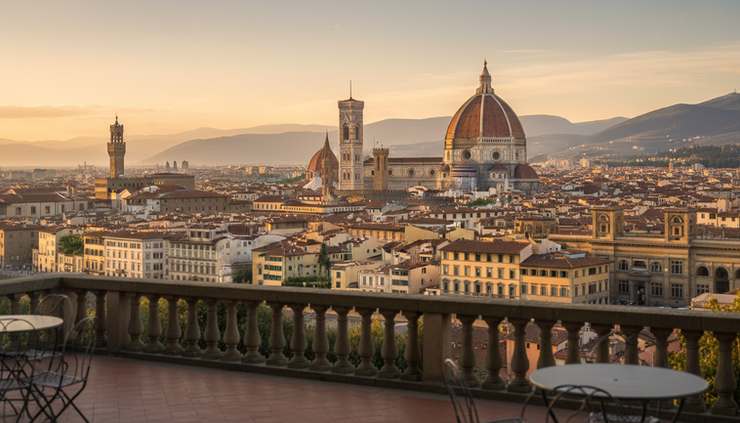
The good news is that Florence is easy once you understand its layout. Most major sights sit within a 20-minute walk of the Duomo. The Arno River splits the city into the classic center on one side and the Oltrarno on the other. Santa Maria Novella station anchors arrivals by train, while the hills above the city offer the views everyone hopes to find.
Use this guide to choose where to stay, decide what to book before you go, move around without stress, and build a short list of sights that actually fits your trip.
Start with the neighborhoods that match your trip
Florence has many named areas, but visitors usually choose from a handful of practical bases. The best area depends on how close you want to be to the main sights, how much quiet you need at night, and whether you will arrive by train.
The historic center keeps everything close
The area around the Duomo, Piazza della Signoria, and the Uffizi is the most convenient place to stay for a first visit. You can walk to almost every major sight, step out early for sunrise photos, and return to your room between museum reservations.
The tradeoff is noise and price. Streets near the Duomo and Ponte Vecchio stay busy late, especially in peak travel months. If you stay here, look for a room on a side street and check reviews for soundproofing.
This area works best for:
First-time visitors
Short stays of one to three nights
Travelers who want to walk almost everywhere
Early museum starts and late evening strolls
Santa Maria Novella works well for train travelers
Santa Maria Novella sits near Florence’s main train station. It is practical if you arrive from Rome, Venice, or Milan, or if you plan day trips to Pisa, Lucca, Bologna, or Siena.
The streets right around the station feel more transit-focused than romantic, but nearby blocks toward Piazza Santa Maria Novella and Via de’ Tornabuoni can be elegant and convenient. It is also a strong choice if you are carrying luggage and want to avoid dragging bags over cobblestones.
Choose this area if easy arrivals and departures matter more than postcard charm.
Oltrarno feels more local and relaxed
Oltrarno means “across the Arno.” This area includes Santo Spirito, San Frediano, and streets leading toward Pitti Palace and Boboli Gardens. It has artisan workshops, wine bars, small trattorias, and a slower pace than the Duomo side.
You still reach the center quickly, usually by crossing Ponte Santa Trinita, Ponte alla Carraia, or Ponte Vecchio. Santo Spirito can be lively at night, so choose streets a few blocks from the square if you want quiet.
Oltrarno is a great fit for repeat visitors, food-focused trips, and anyone who wants Florence without sleeping in the thickest tourist zone.
Santa Croce and San Marco offer useful middle ground
Santa Croce puts you close to the basilica, the Bargello, and great evening walks along the river. It has a neighborhood feel but still keeps you near the historic core.
San Marco and San Lorenzo sit north of the Duomo. San Marco is handy for the Accademia and quieter accommodations. San Lorenzo is close to the Central Market, Medici Chapels, and the train station. Both areas can offer better value than the blocks around Piazza della Signoria.
If you want a simple rule, pick the historic center for convenience, Oltrarno for atmosphere, and Santa Maria Novella for logistics.

Book the high-demand sights before you arrive
Florence is not a city where every attraction needs a reservation. Churches, piazzas, scenic walks, markets, and river views can fill your days without advance planning. A few places are different. If they matter to you, book them early.
The Uffizi Gallery should be a timed reservation
The Uffizi is one of Europe’s great art museums, with works by Botticelli, Leonardo da Vinci, Michelangelo, Raphael, Titian, and Caravaggio. It is also one of Florence’s busiest sights.
A timed ticket helps you avoid the worst lines and protects your schedule. Morning slots are popular, but late afternoon can be rewarding too, especially when tour groups thin out. Give yourself at least two hours. Art lovers can spend much longer.
If you are not a museum person, consider a shorter guided visit rather than skipping it out of fatigue. The building and collection can feel overwhelming without a plan.
The Accademia is mainly about Michelangelo’s David
The Accademia Gallery is smaller than the Uffizi, but demand is intense because of Michelangelo’s David. The sculpture is worth seeing in person. Photos do not capture its scale, tension, or the way it commands the room.
Book a timed entry, especially from spring through fall. Visits can be short if your main goal is David and the unfinished Prisoners. Many travelers pair the Accademia with nearby San Marco or the Medici Chapels.
The Duomo climb needs planning
Florence Cathedral is the city’s symbol, and Brunelleschi’s dome is its crown. Climbing the dome is a memorable experience, with narrow passages, interior views of the frescoed dome, and a sweeping city panorama at the top.
It is also physically demanding. Expect stairs, tight spaces, and no casual exit once you start. If that sounds uncomfortable, climb Giotto’s Bell Tower instead, or enjoy the dome from viewpoints around the city.
The cathedral complex uses ticket types that can include different monuments, such as the dome, bell tower, baptistery, museum, and crypt. Check the current official ticket options before choosing.
Restaurants and special experiences can sell out too
For casual meals, you can often walk in or book the same day. For small, popular trattorias, tasting menus, cooking classes, wine tours, and rooftop aperitivo spots, reserve ahead.
Book ahead for:
A specific restaurant you care about
A birthday, anniversary, or proposal dinner
Small-group food tours
Chianti or Tuscan countryside tours
Dome climb tickets
Uffizi and Accademia timed entry
You do not need to schedule every hour. Florence is best when you leave space for a church you did not plan to enter, a second gelato, or a sunset you decide to chase.
Getting around Florence is mostly about walking smart
Florence’s center is made for walking, not driving. The historic core is dense, scenic, and often faster on foot than by car. Pack shoes with support, because cobblestones are charming for about 10 minutes and hard on your feet after a full day.
Walking is the main form of transportation
Most classic routes are short:
Duomo to Uffizi About a few minutes on foot
Uffizi to Ponte Vecchio A short walk along the river
Ponte Vecchio to Pitti Palace Just across into Oltrarno
Santa Maria Novella to the Duomo Easy with light luggage, slower with heavy bags
Use the Duomo as your compass. If you can see the dome, you can usually reorient yourself quickly.
The tram is useful for the airport
Florence’s tram system is simple and helpful for certain trips. The line connecting the airport with the Santa Maria Novella area is often the easiest option for travelers with manageable luggage. It avoids road traffic and drops you near the main station.
Buy and validate the correct ticket before riding, following the local instructions at the stop or ticket machine. Rules and ticket systems can change, so check details when you arrive.
Taxis are helpful but not always instant
You usually find taxis at stands near the train station, major piazzas, and hotels. In Florence, taxis are commonly taken from ranks or called, rather than hailed anywhere on the street.
Use a taxi when:
You have heavy luggage
You are arriving late
Your hotel sits up a hill
You are traveling with someone who has limited mobility
You need to reach a restaurant or viewpoint outside the center
For most sightseeing days, though, walking will still be simpler.
Driving in Florence is rarely a good idea
If you are renting a car for Tuscany, avoid driving into the historic center unless your hotel gives clear instructions. Florence has restricted traffic zones, known as ZTL areas, and unauthorized entry can lead to fines.
A better plan is to stay car-free in Florence, then pick up a rental car when you are ready to leave for the countryside. If you already have a car, choose a hotel with confirmed parking outside the restricted zone or use a garage that explains access rules clearly.

Build your sightseeing plan around a few anchors
Florence can overwhelm visitors because the list of major sights is long. A better approach is to choose one or two anchors per day, then fill the rest with walks, churches, viewpoints, and meals nearby.
The Duomo complex deserves more than a quick photo
Santa Maria del Fiore, better known as the Duomo, dominates the skyline. Its marble exterior is extraordinary, but the complex includes much more than the cathedral facade.
Make time for at least one of these:
Brunelleschi’s Dome Best for views and the full physical experience
Giotto’s Bell Tower Best for direct views of the dome
The Baptistery Best for mosaics and medieval atmosphere
The Opera del Duomo Museum Best for sculpture, original facade pieces, and context
The cathedral interior is simpler than many visitors expect. The real story is the engineering, the scale, the dome, and the surrounding monuments.
Piazza della Signoria links art and politics
Piazza della Signoria feels like an outdoor museum. Palazzo Vecchio still anchors the square, while the Loggia dei Lanzi displays major sculptures in the open air. The replica of David marks the spot where the original once stood.
This is a good place to linger, especially early in the morning or after dinner. From here, the Uffizi and Arno are steps away.
The Uffizi works best with a short hit list
The Uffizi is rich enough to exhaust anyone. Before you go, pick a few works or rooms you most want to see. Botticelli’s Birth of Venus and Primavera draw crowds, but do not rush past quieter rooms just because they are less famous.
If you visit without a guide, take breaks by the windows when you can. Some views over the Arno and Ponte Vecchio are sights in themselves.
Cross the river for Pitti Palace and Boboli Gardens
Pitti Palace and the Boboli Gardens show a different side of Florence, more courtly and spacious. The palace holds several collections, while the gardens offer terraces, sculpture, and city views.
This area pairs well with Santo Spirito. Plan a palace or garden visit in the morning, then lunch or aperitivo in Oltrarno.
Save sunset for the hills
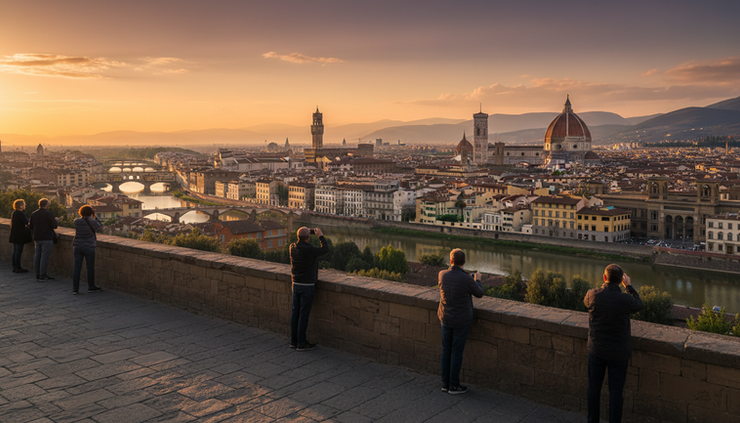
Piazzale Michelangelo is the classic sunset viewpoint. It gets crowded, but the view is famous for good reason: the entire city spreads out below, with the Duomo, Palazzo Vecchio, Santa Croce, and the Arno in one frame.
For a quieter, more atmospheric stop, continue up to San Miniato al Monte. The church is beautiful, and the terrace offers one of the best views in Florence.
A simple Florence plan for two or three days
A good Florence itinerary does not need to be packed. The city’s greatest pleasure is moving between masterpieces and ordinary moments: a small espresso at the counter, a quiet chapel, a bridge at dusk.
For two days, use this structure:
Day | Morning | Afternoon | Evening |
Day 1 | Duomo area and dome or bell tower | Piazza della Signoria and Uffizi | Ponte Vecchio and Oltrarno dinner |
Day 2 | Accademia and San Marco or San Lorenzo | Santa Croce or Bargello | Piazzale Michelangelo and San Miniato |
For three days, slow the pace. Add Pitti Palace and Boboli Gardens, a food tour, the Medici Chapels, or a half-day trip to Fiesole. If you love museums, give the Uffizi its own relaxed half day instead of squeezing it between other major sights.
A few practical tips help the city feel easier:
Visit the most famous sights early or later in the day.
Check closing days before you lock in your schedule.
Carry a reusable water bottle, Florence has public fountains around the center.
Dress respectfully for churches, with shoulders and knees covered when required.
Do not plan back-to-back timed tickets too tightly. Streets are short, but lines and crowds slow everything down.
Eat away from the most photographed corners when you can. A five-minute walk often changes the mood and the menu.
Florence does not need to be “done.” It needs to be paced. Choose a neighborhood that fits your travel style, reserve the sights that truly require it, walk more than you ride, and leave room for the city to surprise you. The best Florence days usually start with a plan, then improve the moment you wander slightly off it.


Comments